
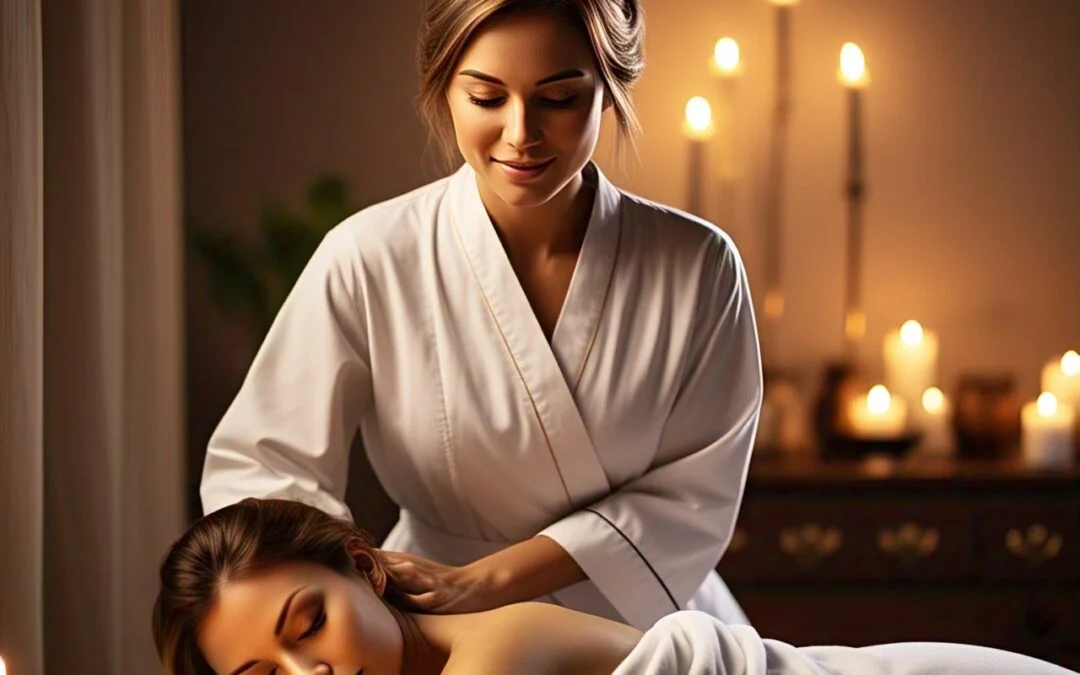
You are on a massage table and the therapist asks what kind of pressure you prefer. Deer-in-headlights, right? Most people just say “whatever’s fine,” cross their fingers and hope for the best. Deciding between Swedish, deep tissue and Balinese massage isn’t only a matter of taste — the three styles feel completely different, and knowing which is which is the difference between a session you enjoy and one you endure.
Below is what actually happens during each of these three massages, who tends to enjoy which, and how to tell the therapist what you want once you are on the table.
Learn About the Different Styles of Massage
Typical Features of the Swedish Massage
Swedish massage is the plain vanilla ice cream of massages — well known, widely offered, and a sensible place for a first-timer to start. It uses long, flowing strokes and a lighter pressure than the other two styles. If you are after relaxation without intensity, this is your ticket. The session is built around five primary strokes: effleurage (gliding), petrissage (kneading), friction (circular hand-over-hand movement), tapotement (rhythmic tapping) and vibration. Your therapist works with oil so their hands glide rather than drag.
Swedish massage suits you if you want:
• Time set aside to unwind properly
– A lighter, gentler pressure
– Long, rhythmic, predictable strokes
– A first massage that isn’t intimidating
– To finish the session feeling calm rather than worked over
Most guests leave feeling rested and unhurried. The pressure is lighter than the other styles, which is exactly why it works well for first visits.
Some Characteristics of the Deep Tissue Massage

Deep tissue massage is a different animal. The therapist works slowly and deliberately with firm pressure, spending real time on the areas that feel tight rather than covering the whole body evenly. Where Swedish glides, deep tissue sinks in and stays. Your therapist may use forearms, elbows, knuckles and thumbs to reach the deeper muscle layers.
It tends to suit guests who:
• Sit at a desk all day and feel it across the shoulders
– Train hard and finish the week feeling stiff
– Have asked for “firmer” at other spas and still wanted more
– Prefer focused work on two or three areas over a full-body glide
– Don’t mind a session that is more work than lullaby
Fair warning: deep tissue can feel intense while it is happening. That “hurts so good” sensation is real and most people rather like it. Drink water afterwards and give yourself an unhurried hour before anything strenuous.
What Sets It Apart — Balinese Massage
Balinese massage draws on techniques from Indonesia, China and India, and it is the most varied of the three. It blends gentle stretching with acupressure, aromatic oils and flowing Swedish-style strokes. Your therapist will move between long strokes, skin rolling, and palm and thumb pressure across the session rather than staying with one technique throughout.

What’s distinctive about Balinese massage:
• Scented oils such as coconut, jasmine and sandalwood
– Gentle, yoga-like passive stretching
– Pressure applied along traditional energy lines
– Pressure that shifts between gentle and medium through the session
– Attention to reflexology points on the feet
The aromatic-oil element gives the session a sensory dimension the other two don’t have, and it is the reason many guests pick it when they want the massage to feel like an occasion rather than a maintenance appointment.
A Brief History of Massage Techniques
Massage isn’t a recent spa invention — people have been working on each other’s stiff shoulders for thousands of years. The earliest known massage writing is Chinese, from roughly 2700 BCE, in the Huangdi Neijing (The Yellow Emperor’s Classic of Internal Medicine). Ancient Egyptians were practising their own form of foot and hand work, as tomb paintings show.
Hippocrates, in Greece around 400 BCE, wrote about the use of “friction” in bodywork, and is quoted as saying that the physician must be experienced in many things, but most assuredly in rubbing.
Swedish massage as we know it was formalised in the 19th century by the Dutch practitioner Johan Georg Mezger, who named the five strokes that still define it: effleurage, petrissage, friction, tapotement and vibration.
Deep tissue is much newer, emerging through the middle of the 20th century as therapists developed firmer approaches for guests who wanted more pressure than the classic styles offered.
Balinese massage grew over centuries of trade and cultural exchange between Indonesia and its neighbours, absorbing influences from across Asia into the distinctive blended style practised today.
Traditional Swedish Massage: The Time-Honoured Method to Unwind
History and Philosophy of Swedish Massage
Swedish massage didn’t appear from nowhere. Its foundations were laid in the early 19th century by the Swedish physiologist Per Henrik Ling, who drew together movement and manual techniques from several older traditions into a single teachable system.
The idea behind it is straightforward: work with the natural lines of the body rather than against them. The strokes follow long, continuous paths rather than jumping around, which is a large part of why the session feels so unbroken and easy to sink into.
Unlike firmer styles, Swedish massage is built on the premise that gentle, rhythmic, sustained contact is enough. This isn’t the massage where you grip the table. The aim is an unhurried, settling hour.
Five Fundamentals — Inside a Swedish Session
Once you are on the table, expect these five techniques:
1. Effleurage — long sweeping strokes that begin the session and warm the muscles
2. Petrissage — a kneading motion, much like working dough
3. Friction — small circular strokes that generate warmth
4. Tapotement — brisk tapping or percussive movements
5. Vibration — a quick shaking movement across the muscle
Each has its place in the sequence. Your therapist usually opens with effleurage to warm the area, then moves into petrissage and friction where the muscle feels tight.
What Guests Notice Most
Swedish massage is chosen more often than any other style for one simple reason: it is the easiest hour to enjoy. The rhythm is steady, the pressure is predictable, and there is nothing to brace against. Guests routinely describe leaving lighter, looser and considerably less wound up than when they arrived.
What guests most often mention afterwards:
• Muscles that feel looser and less guarded
– Easier, freer movement through the shoulders and back
– A settled, unhurried feeling that lasts into the evening
– A rare hour with no phone and nothing to do
Best Candidates for Swedish Massage
Swedish massage is the gateway massage — it suits almost everyone. It is a particularly good fit if:
• This is your first massage and you want somewhere sensible to start
– You carry everyday tension across the neck and shoulders
– You want an unhurried hour rather than intensive work
– You’d rather not deal with strong pressure
– You’re booking as a treat rather than as maintenance
It is also the right call if you feel self-conscious about the whole idea. The pressure is adjustable throughout, so nothing has to be endured.
What to Expect at Your First Session
Nervous about a first Swedish massage? Here is the sequence.
Your therapist begins by asking which areas you’d like them to concentrate on, whether there’s anywhere to avoid, and how much pressure you prefer. They then step out while you undress to your comfort level and settle on the table under the drape.
When they return, the session opens with light strokes to warm the muscles. Oil or lotion is used so the hands glide easily.
A typical session runs 60 to 90 minutes. You’ll usually start face down and turn over roughly halfway through. The therapist uncovers only the area being worked on and keeps you draped and comfortable throughout.
And you don’t have to talk. Some guests chat the whole way through, others fall asleep in the first ten minutes. It’s your hour — spend it however you like.
Deep Tissue Massage: Firm, Focused, Unhurried
How Deep Tissue Differs from Other Techniques
Deep tissue is not a Swedish massage with the pressure turned up. It is a different approach altogether. Where Swedish covers the body in broad, even strokes, deep tissue narrows the focus and stays with the areas that need the time.
The main difference is speed and depth. Strokes are slower, pressure is sustained rather than passing, and the therapist may use elbows and forearms to work the deeper layers.
And unlike Balinese, which moves between techniques for variety, deep tissue is single-minded. Your therapist may spend most of the session on your back and shoulders and comparatively little elsewhere — that is the style working as intended, not the therapist running short of time.
Why the Firm Pressure Feels Good
Ever wondered why that “hurts so good” sensation is so satisfying? Sustained pressure on a tight area produces a distinctive releasing sensation that lighter strokes simply don’t, and it is the reason guests who like deep tissue tend to like it a great deal and rarely go back to gentler styles.
It is worth being clear about what deep tissue is: a firm, focused, physically involved massage. Many guests find it the most satisfying hour of their month. It is not a medical treatment, and we don’t present it as one — if something hurts, is injured, or has been diagnosed, that belongs with your doctor rather than with us.
Who Tends to Book It
Deep tissue is most often chosen by guests who:
• Work long hours at a desk or over a laptop
– Train regularly and want firm work between sessions
– Have found other massages too light to feel like anything
– Want two or three areas worked properly rather than a full-body pass
– Book on a routine rather than as an occasional treat
It is the most requested massage at White N Bright, by a wide margin.
Pressure and Comfort Preferences
Deep tissue shouldn’t be excruciating. The old “no pain, no gain” line is nonsense. You’ll meet real pressure and some discomfort, but you should never be gritting your teeth or holding your breath.
A good therapist stays inside your comfort threshold and increases pressure only as the muscle relaxes. Speaking up is the whole trick — a simple scale helps:
1–3 Comfortable pressure — you could ask for more
4–6 Firm and satisfying — breathe through it
7–8 At the edge — ask for less
9–10 Too much — say stop, immediately
Afterwards, drink water and don’t schedule anything strenuous straight after. Give the rest of the evening a lighter load than usual.
Balinese Massage: An Indonesian Tradition
Cultural Origins
Balinese massage is steeped in centuries of Indonesian tradition, with layers of influence from China, India and Southeast Asia. It developed out of the island’s spiritual and cultural life rather than as a clinical discipline, and that origin still shapes how the session feels — unhurried, ceremonial, and built around ritual as much as technique.
What sets it apart is the sheer breadth of what it borrows. You’ll recognise flowing movements reminiscent of Indian traditions, pressure-point work familiar from Chinese practice, and the Indonesian use of local plants, spices and aromatic oils.
Step into a traditional Balinese spa and the whole environment is part of it: incense, gamelan music, and practitioners who treat the work as a craft handed down rather than a service delivered.
Three in One: Acupressure, Stretching and Aromatic Oils
Balinese massage isn’t a single technique, it’s a compilation of the best of several. First, the pressure — palms, thumbs and elbows working into the muscle, ranging from gentle through to firm, adjusted as the session goes on.
Then the stretching. Your therapist gently moves and rotates your limbs into yoga-like positions. These passive stretches, coming after the pressure work, are the part guests remember.
And then the oils. Sandalwood, jasmine and lemongrass aren’t there only to smell good, though they certainly do — the scent is a deliberate part of the experience, and it is what makes a Balinese session feel unlike any other massage on the menu.
The combination is what makes it work: pressure, then mobility, then the sensory layer on top.
Why Guests Choose the Balinese Method
The Balinese method is the one to book when you want the massage to feel like an event. Physically, you’ll notice tight muscles letting go and easier movement through the shoulders and hips. But the variety is the real appeal — the session keeps changing, and it never settles into routine.
Guests most often describe feeling grounded afterwards, as though they’ve come back into their body after a long stretch of living in their head. That is unsurprising: in its original setting, this massage is approached as a meditative practice by the therapist as much as by the guest.
Bottom line? If you want a massage that’s as much an experience as a treatment, Balinese is the one.
Matching the Style to What You Want
If You Want Firm, Focused Work
Deep tissue is the obvious pick. It concentrates on the areas that feel tight and stays there, with slow sustained pressure rather than passing strokes.
Swedish suits you better if firm pressure sounds like more than you want. The lighter sweeping strokes still release a great deal of everyday tightness, without the intensity.
Balinese sits between the two and moves along that range within a single session, which is why guests who can’t decide often land on it.
If You Want to Unwind
Swedish massage is the classic choice when your head is going a mile a minute and your shoulders have taken up residence near your ears. The rhythm is steady and predictable, and it is very easy to switch off to.
Balinese takes that further with the aromatic oils. The blend of gentle stretching, scent and medium pressure makes it the most immersive of the three.
And deep tissue, counter-intuitively, is what some guests find most settling of all — if you carry tension physically, having it worked out firmly can be more effective than an hour of gentle strokes.
If You Train Regularly
Deep tissue is the usual pick for guests who train hard. It concentrates on the muscle groups you’ve been loading, with the firm sustained pressure that lighter styles can’t deliver.
Swedish works well between heavier training days, when you want an unhurried hour without intensity added to muscles that are already sore.
And the stretching in a Balinese session is the part active guests tend to appreciate most — think of it as being moved through positions you’d struggle to hold yourself.
Pregnancy, Medication and Medical Conditions
If you are pregnant, taking regular medication, recovering from surgery or under care for any medical condition, please speak to your doctor before booking a massage, and tell us when you book so we can plan the session appropriately. We are a day spa, not a clinical service — we don’t offer therapeutic or medical massage, and we won’t advise on any medical question. Your doctor decides what’s suitable; we make the session comfortable within that.
Making Your Decision
Questions to Ask Before You Book
A few honest answers will point you straight at the right choice:
• What do I want from the hour? Firm focused work, or time to switch off?
– How much pressure do I actually enjoy? Be truthful rather than ambitious.
– How do I want to feel afterwards? Wide awake and loose, or ready for a nap?
– Is this a routine booking or an occasion? Balinese suits occasions; deep tissue suits routine.
Those answers will send you towards Swedish (gentle and unhurried), deep tissue (firm and focused) or Balinese (varied and immersive).
When to Mix and Match Techniques
Good therapists don’t work from a single playbook, and some of the best sessions borrow across styles.
Worth asking for a blend when:
• One area wants far firmer work than the rest of you
– You’d like a mostly relaxing session with firm attention on the shoulders
– Balinese appeals but you’re unsure about the pressure
Just ask. Your body, your hour, your call.
Talking to Your Therapist
The difference between a fine massage and a memorable one is usually communication.
Before the session:
• Say where you’d like the time spent, and where to avoid
– Be specific about pressure — “firm but not brutal” means different things to different people
– Mention anything relevant, including pregnancy or recent surgery
– Name your goal for the hour: “mostly my lower back today”
And during the massage, speak up. If something is too much, or feels particularly good, or a limb has gone numb, say so. Your therapist can’t read minds.
How Often Should You Book?
A single massage is a good hour. A regular one becomes something you look forward to. There is no correct schedule — it depends entirely on what you enjoy and what fits your week.
In practice, our guests tend to fall into three patterns: once a month as a standing appointment, every few weeks during heavy work or training periods, and occasionally as a treat or a gift. Any of those is perfectly reasonable.
Notice how long the loose, settled feeling lasts after each session, and let that set your own rhythm.
Pricing and Value
Massage prices vary with location, therapist experience and the standard of the spa. What is worth weighing:
• Therapist training — experience and ongoing training show up in the hour
– Session length — check whether the quoted time is hands-on or includes changing
– The setting — a considered space genuinely changes how the session feels
– Memberships — worth asking about if you plan to come regularly
Here is what these three styles cost at White N Bright Spa & Salon in Thane West (all prices include 5% GST):
| Massage style | 60 minutes | 90 minutes |
|---|---|---|
| Swedish Massage | ₹2,625 | ₹3,675 |
| Balinese Massage | ₹2,940 | ₹3,990 |
| Deep Tissue Massage | ₹3,150 | ₹4,200 |
Every full-body massage includes complimentary use of our steam and shower facility. Our therapist team serves guests of all genders, at our single location on Pokharan Rd No. 2, Vasant Vihar, Thane West — close to Hiranandani Meadows, Manpada, Majiwada, Kolshet Road and Viviana Mall.
Book your massage in Thane West
Ready to choose your style? Book your session online or call us on +91 88280 28088. White N Bright Spa & Salon — winner of the Three Best Rated Certificate of Excellence for three consecutive years and the Radio City City Icon Award.
Further reading: Wikipedia – Massage and Mayo Clinic – Massage therapy benefits.